
Hydration vs moisture, and why it matters
These two words get used interchangeably and they shouldn't. Knowing the difference reorganises a routine.
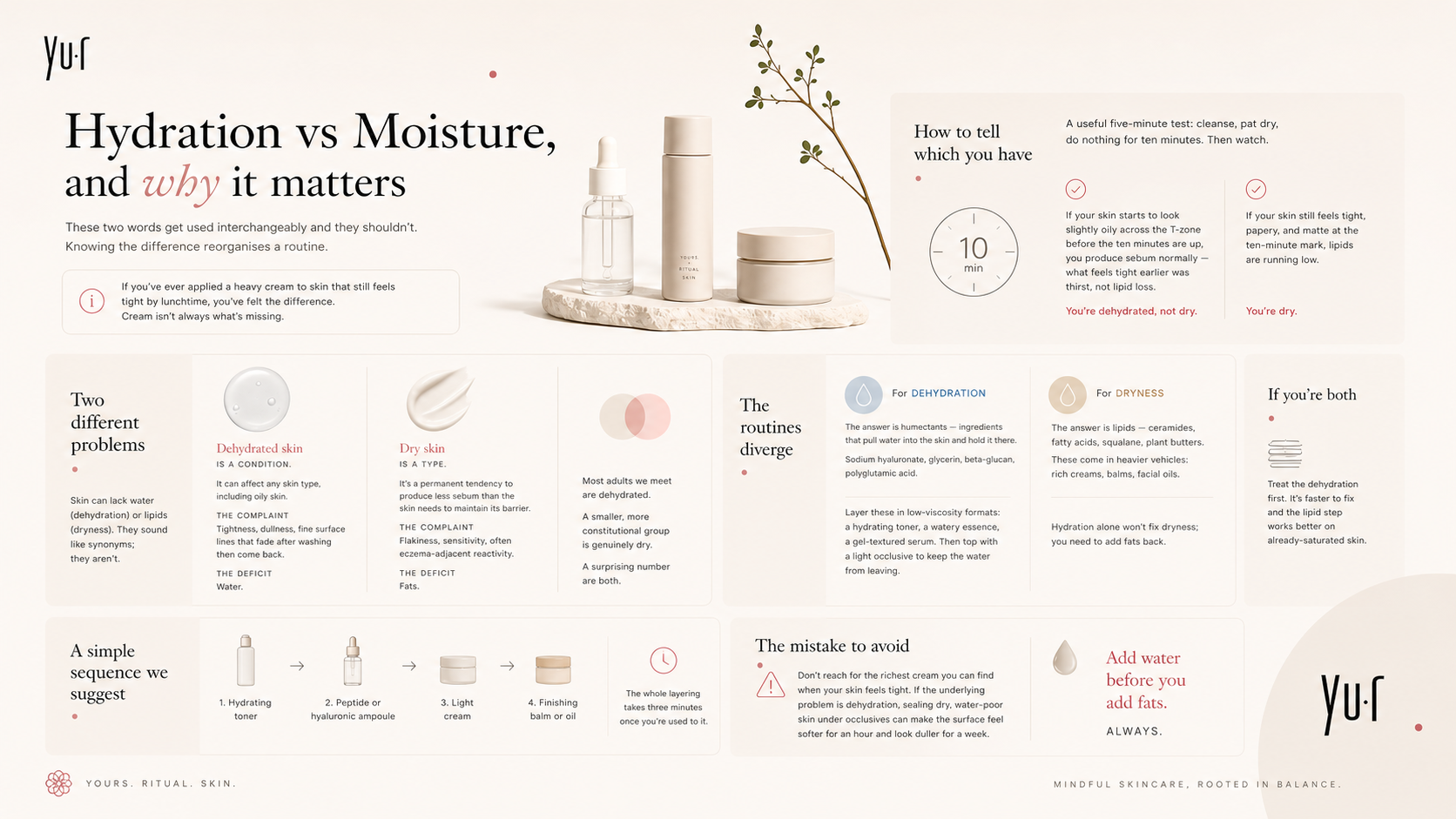
If you've ever applied a heavy cream to skin that still feels tight by lunchtime, you've felt the difference. Cream isn't always what's missing.
Two different problems
Skin can lack water (dehydration) or lipids (dryness). They sound like synonyms; they aren't.
- Dehydrated skin is a condition. It can affect any skin type, including oily skin. The complaint is tightness, dullness, fine surface lines that fade after washing then come back. The deficit is water.
- Dry skin is a type. It's a permanent tendency to produce less sebum than the skin needs to maintain its barrier. The complaint is flakiness, sensitivity, often eczema-adjacent reactivity. The deficit is fats.
Most adults we meet are dehydrated. A smaller, more constitutional group is genuinely dry. A surprising number are both.
How to tell which you have
A useful five-minute test: cleanse, pat dry, do nothing for ten minutes. Then watch.
If your skin starts to look slightly oily across the T-zone before the ten minutes are up, you produce sebum normally — what feels tight earlier was thirst, not lipid loss. You're dehydrated, not dry. If your skin still feels tight, papery, and matte at the ten-minute mark, lipids are running low. You're dry.
The routines diverge
For dehydration, the answer is humectants — ingredients that pull water into the skin and hold it there. Sodium hyaluronate, glycerin, beta-glucan, polyglutamic acid. Layer these in low-viscosity formats: a hydrating toner, a watery essence, a gel-textured serum. Then top with a light occlusive to keep the water from leaving.
For dryness, the answer is lipids — ceramides, fatty acids, squalane, plant butters. These come in heavier vehicles: rich creams, balms, facial oils. Hydration alone won't fix dryness; you need to add fats back.
If you're both
Treat the dehydration first. It's faster to fix and the lipid step works better on already-saturated skin. A typical sequence we'd suggest: hydrating toner, peptide or hyaluronic ampoule, light cream, finishing balm or oil. The whole layering takes three minutes once you're used to it.
The mistake to avoid
Don't reach for the richest cream you can find when your skin feels tight. If the underlying problem is dehydration, sealing dry, water-poor skin under occlusives can make the surface feel softer for an hour and look duller for a week. Add water before you add fats. Always.
— Oleksandra